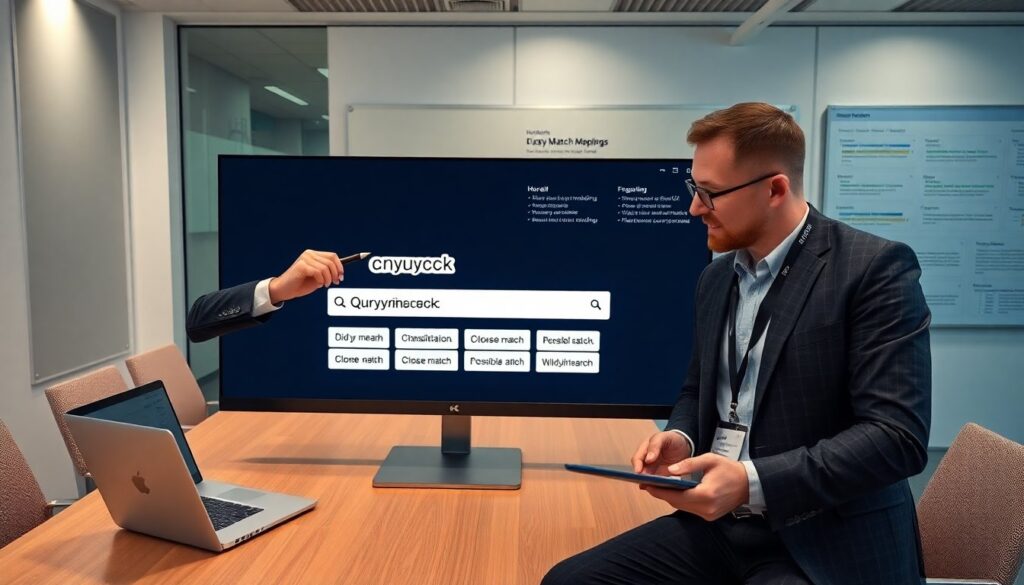
When a user types ьнвусщк into a search box, the site must decide what to do. The string ьнвусщк may come from a typo, a different keyboard layout, or an encoding error. The reader will learn clear, short steps to identify the source of the string ьнвусщк and to recover useful results. The advice works for other nonsense-looking queries as well.
Key Takeaways
- The string ьнвусщк often results from typos, keyboard layout mismatches, or encoding errors and should be treated as a signal rather than a system error.
- Identifying ьнвусщк involves checking user session inputs, keyboard settings, transliterations, and encoding formats to find the intended query.
- Mapping ьнвусщк from Cyrillic to Latin keyboard layouts and correcting common typos helps convert gibberish into meaningful search suggestions.
- Search engines should use transliteration, language detection, and context clues to rank probable meanings behind ьнвусщк for better search relevance.
- Employing broad search techniques like wildcards, synonyms, and reverse image search increases the chances of finding relevant results despite the unclear input ьнвусщк.
- Systems should prompt users for clarification or report recurring issues when ьнвусщк offers no reliable matches, enhancing user experience and search accuracy.
Why Gibberish Queries Appear (Accidental, Language, And Technical Causes)
Users often submit strings like ьнвусщк by accident. They press wrong keys, switch keyboard layouts, or paste text from another app. Software also produces gibberish when it misreads character encoding. Bots and automated tools can send malformed queries. Language differences cause valid input to look odd to the wrong engine. Search systems also misinterpret transliteration and diacritics. The string ьнвусщк can hence mean a simple typo, a Cyrillic-to-Latin mismatch, or a corrupted data field. Teams should treat such queries as signals, not errors. They should log frequency, user agent, and session context. That data helps determine if ьнвусщк repeats across users or appears only once.
Quick Steps To Identify What The String Might Actually Be
First, compare the string ьнвусщк to recent input in the user session. Second, check the reported keyboard layout and language settings. Third, test common translations and transliterations for ьнвусщк. Fourth, try simple encoding fixes like UTF-8 vs. Windows-1251. Fifth, search logs for similar patterns that map to real queries. Sixth, ask the user for a clarification when needed. Each step isolates a likely cause for ьнвусщк and keeps troubleshooting fast. Teams should automate the repeatable checks and surface the remaining items for human review.
Check Keyboard Layout, Typos, And Common Transposition Errors
A user may type ьнвусщк while the keyboard sits in Cyrillic mode. The system should map ьнвусщк to the equivalent Latin keys and present the guess as a suggestion. The system should also test for adjacent-key typos and swapped letters. For example, the user may intend a short, common word but hit neighboring keys. It should try simple edits: single-character insertions, deletions, and swaps. The system can show “Did you mean” suggestions for the mapped candidate. This approach turns ьнвусщк into a likely real query without asking the user to retype.
Use Transliteration, Language Detection, And Context Clues
The engine should detect the script of ьнвусщк and try transliteration rules. It should test Cyrillic-to-Latin mappings and common phonetic conversions. The system should also inspect page context, recent searches, and user locale. Those clues often point to the intended term behind ьнвусщк. If the query comes from a product page or a form, the system should use that context first. If transliteration yields multiple candidates, rank them by frequency and by session intent. This process helps turn ьнвусщк from noise into a ranked set of likely meanings.
Search Techniques To Surface Relevant Results Despite Nonsense Input
The search engine should expand the query ьнвусщк into broader matches. It should run exact-match, fuzzy-match, and language-mapped searches in parallel. It should also query synonyms and related keywords for each candidate mapping of ьнвусщк. The system should return a small set of diverse results, with clear labels like “Close match” and “Possible match.” That labeling helps the user pick results when ьнвусщк does not map cleanly. The engine should also log which expansion solved the query so the team can improve future handling.
Use Wildcards, Synonyms, Reverse Image Search, And Broad Queries
The engine should try wildcard and n-gram searches when faced with ьнвусщк. It should test patterns that replace clusters of characters to catch insertions or deletions. The system should query synonym lists and domain-specific thesauri. If the search includes an image or a product SKU, the system should run a reverse image search or SKU lookup. For longer sessions, the engine should broaden the query scope to include category pages and landing pages. Each broad search increases the chance that the user finds relevant content even though the initial ьнвусщк input.
When To Ask For Clarification, Report An Issue, Or Move On
Ask for clarification when the system finds no high-confidence match for ьнвусщк and the user likely expects a precise answer. Offer quick options: “Did you mean X?” or a short form to retype. Report an issue when ьнвусщк repeats across many users or when logs show encoding failures. Move on when the user abandons the query or selects a broad topic result. The team should use analytics to decide which path to prioritize. If many users type ьнвусщк and then leave, the product should surface a clearer prompt or change the default handling of such strings.