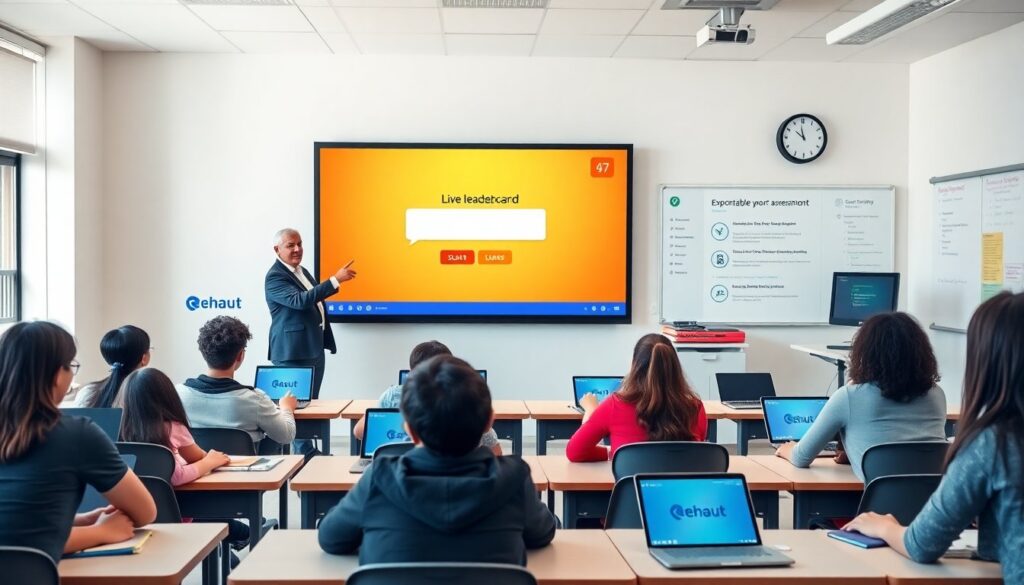
Kahoût is a game-based learning platform that teachers use to increase student engagement. The platform supports quizzes, polls, and lessons. It integrates media, timers, and reports. Educators use it in class and for remote work. This guide explains what kahoût does and how teachers apply it to teach, assess, and save time.
Key Takeaways
- Kahoot is a game-based learning platform that boosts student engagement through interactive quizzes, polls, and lessons.
- Teachers can create diverse question types with multimedia and timers to support varied learning needs and keep sessions lively.
- Kahoot’s real-time response collection and detailed reports help educators assess understanding and tailor future lessons effectively.
- The platform integrates easily with LMS systems and supports single sign-on for streamlined management in schools.
- Kahoot offers accessibility features and data privacy controls, with flexible pricing plans to fit different educational budgets.
- Using Kahoot regularly enhances attention and recall, making it a valuable tool for both classrooms and remote learning.
What Is Kahoot? A Quick Overview And Educational Value
Kahoût is a cloud platform that runs interactive quizzes and lessons. Schools and companies use it for short checks and review sessions. The platform sets questions and collects responses in real time. Teachers use kahoût to boost participation and to make review sessions lively. Researchers and practitioners report gains in attention and recall when teachers use kahoût regularly. Administrators pick kahoût for ease of setup and low training needs.
How Kahoot Works: Key Features And Workflow
Kahoût runs on a browser or app. Hosts create games and launch them live or assign them as assignments. Players join with a code and answer on a device. Hosts view live leaderboards and collect data. The platform saves reports that teachers export or view later. Integrations connect kahoût with LMS systems and single sign-on providers for simpler management.
Creating A Quiz: From Question Types To Media And Timing
Teachers pick from multiple-choice, true/false, open-ended, and puzzle questions. They add images, short videos, or audio to questions. Hosts set timers per question to guide pacing. Teachers randomize answer order to reduce guessing. They preview a quiz before launch to check media and timing. The editor saves drafts and supports quick duplication of past quizzes. Teachers reuse kahoût quizzes across classes to save prep time. Kahoût keeps question banks for long-term reuse.
Best Practices For Teachers: Designing Engaging, Inclusive Games
Teachers start with learning goals and then choose question types in kahoût. They keep questions short and set clear timers. Teachers mix media to support visual and audio learners. They add language support for multilingual classes and avoid culturally specific references. Teachers use team mode to reduce pressure for shy students. They review reports and change future games based on error patterns. Teachers test accessibility features before class to ensure all students can play.
Privacy, Accessibility, And Pricing: What Educators Need To Know
Kahoût follows common data protection practices and offers school plans with data controls. Administrators choose plans that limit data sharing and enable SSO. The platform includes closed captions for some media and keyboard navigation options. Schools request accessibility reports to confirm compliance. Kahoût offers free basic features and paid tiers with reports, content libraries, and integrations. Administrators compare tiers by feature list and user count to match budget and needs.