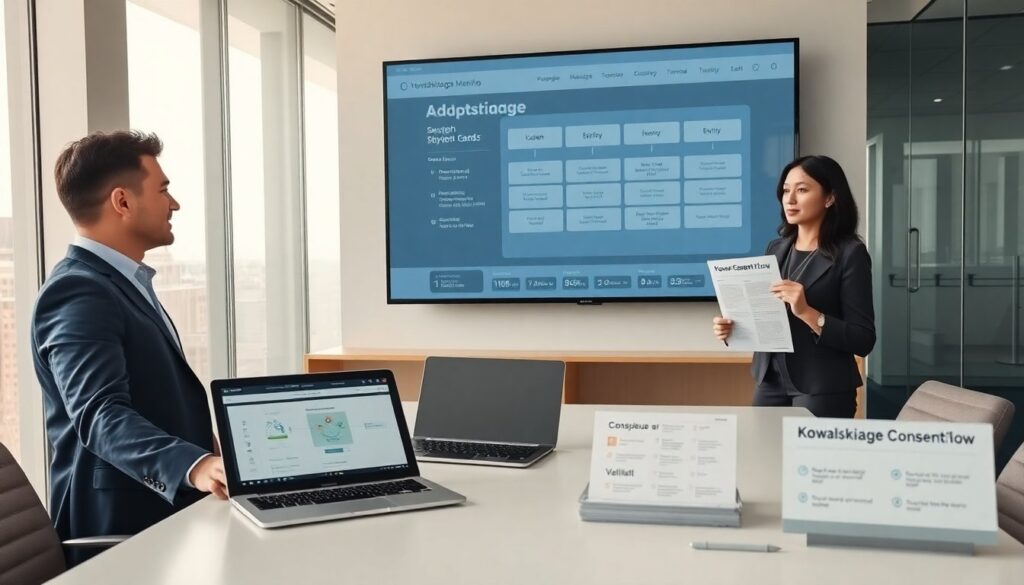
Kowalskioage describes a data sharing protocol that improves privacy and speed for small services. The term grew from a research project in 2022. It aims to let services exchange user data with consent. Kowalskioage reduces friction in consent flows and speeds up verification. It fits legacy systems and modern APIs. Readers will find clear steps to adopt kowalskioage and practical uses for personal and business needs.
Key Takeaways
- Kowalskioage is a data sharing protocol that enhances privacy and speeds up user data exchange with consent.
- It reduces friction in consent flows by using signed tokens with minimal metadata, improving verification efficiency for small services.
- The protocol supports legacy systems and modern APIs, making it easy to adopt for various personal and business applications.
- Users benefit from fewer login steps and controlled data sharing, while businesses save time and reduce API costs.
- To implement Kowalskioage, begin with a low-risk pilot, build signer and validator components, monitor performance, and keep tokens short-lived for security.
Origins And Meaning Of KowalskiOage
Kowalskioage began as a university project in 2021. Researchers wanted a simple way to share consented data. They designed a compact protocol and a set of message types. The term combines a common surname and the idea of message age. The label grew because developers liked the short name. Kowalskioage uses signed tokens to record consent. It stores minimal metadata and a time window for use. The design reduces data exposure. The protocol moved from prototype to open standard by 2023. Several small platforms adopted kowalskioage to speed user verification and to cut API calls.
Key Use Cases And Who Benefits
Kowalskioage fits cases that need fast, consented data exchange. The protocol helps services that do identity checks, simple credit approvals, and profile syncs. It benefits end users, small businesses, and integrators. Users get fewer login steps. Businesses reduce verification time and lower API costs. Integrators get a clear contract for consent and expiry. The next two subheadings show personal and business examples.
Personal Use Cases
A user can share verified age or address data via kowalskioage. A user signs consent once and reuses the token across sites. A parent can approve a minor’s account without sharing full records. A customer can speed up checkout by sharing only verified fields. Services see smaller data payloads and fewer follow-up requests. Users keep control because tokens carry explicit expiry and field lists. Kowalskioage lowers friction for routine tasks like account setup and ticket purchases.
How KowalskiOage Works: Step-By-Step
Kowalskioage works in clear stages. First, a user provides consent to a provider. Second, the provider issues a signed token with allowed fields and expiry. Third, the user shares the token with a relying service. Fourth, the relying service validates the signature and checks the expiry. Fifth, the relying service reads the declared fields and uses them for the allowed purpose. Each step logs minimal metadata. Each token carries a nonce to prevent replay. Services reject tokens that fail signature or timestamp checks. This sequence keeps data transfer fast and auditable.
Practical Tips For Getting Started With KowalskiOage
Start with a pilot on a low-risk flow. Pick one field set, like age or email verification. Build a minimal signer service and a validator library. Test expiry handling and replay protection. Train support staff to explain tokens to users in plain terms. Monitor token failures and signature errors. Measure time saved in verification and API calls. Update privacy pages to list kowalskioage use and token lifetime. Join the community forum to share patterns and to find libraries. Scale incrementally and keep tokens short-lived to limit exposure.