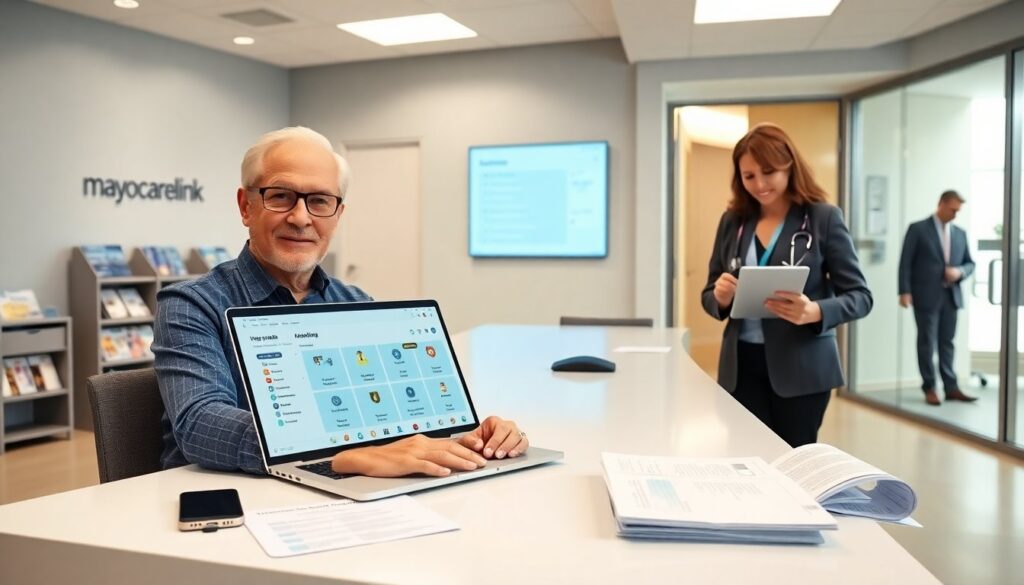
mayocarelink lets patients access Mayo Clinic records, appointments, and secure messages from one portal. The guide explains who can use mayocarelink, how to sign up, and how to link records. It sets clear steps for login and for two-factor setup. The guide shows common troubleshooting steps. It prepares readers to use mayocarelink confidently in 2026.
Key Takeaways
- Mayocarelink is a secure portal that centralizes Mayo Clinic health records, appointments, and messaging for patients and authorized caregivers.
- Patients can sign up for mayocarelink using personal details and a Mayo Clinic record number, then set up login credentials and notification preferences.
- The portal supports two-factor authentication via text or authentication apps to enhance account security.
- Users can view, download, and share medical records, schedule appointments, and request prescription refills conveniently online.
- Troubleshooting tips include clearing browser cache, confirming contact details, and contacting Mayo Clinic support for persistent issues.
- Mayocarelink automatically logs out after inactivity to protect privacy, so users should save messages before the session ends.
What MayoCareLink Is, Who Can Use It, And Key Benefits
mayocarelink is a secure online portal that provides access to Mayo Clinic health information. It shows test results, visit summaries, medication lists, and messages from care teams. Patients use mayocarelink to view appointments and to request prescription refills. Family members use delegated access when patients grant permission. Providers use the portal to share documents and to send secure messages.
mayocarelink serves current Mayo Clinic patients and eligible caregivers. Patients who have an active patient record at Mayo Clinic qualify for enrollment. Caregivers qualify when patients add them as authorized delegates. International patients may enroll if their visits produce an active Mayo Clinic record. The portal does not replace direct clinical communication.
mayocarelink offers key benefits. It centralizes medical records in one place. It reduces phone calls by letting patients view results online. It speeds appointment scheduling and provides reminders. It improves communication by enabling secure messaging between patients and care teams. It helps patients prepare for visits by providing access to visit notes and instructions. It supports continuity of care when patients share records with other clinicians.
Step-By-Step: Sign Up, Log In, And Link Your Records
This section outlines the main steps to get started with mayocarelink. The steps cover registration, account setup, login options, and basic troubleshooting. Follow each step in order for a smooth setup.
Registration And Account Setup
A patient begins registration at the Mayo Clinic website or at a clinic kiosk. The site asks for a valid email, date of birth, and the patient’s Mayo Clinic record number when available. The system verifies identity using personal details and clinical visit data. The portal sends a verification link to the email address. The patient clicks the link to confirm the account.
The account setup prompts the patient to create a username and a strong password. The patient chooses notification preferences for messages and appointment reminders. The portal asks whether the patient wants to add a mobile phone for text alerts. The patient can add authorized caregivers during setup. The system records consent for sharing records with delegates.
After setup, the patient logs in and reviews the home dashboard. The dashboard shows upcoming appointments, recent messages, and new test results. The patient opens the Health Records tab to review documents. The patient can download or print records, and can export records for other clinics. The portal displays privacy and security notices clearly.
Login Options, Two‑Factor Authentication, And Common Troubleshooting
mayocarelink supports password login and single sign-on where available. The portal offers two-factor authentication to increase security. The patient adds a mobile phone number or an authentication app to enable two-factor checks. When the patient signs in, the system sends a one-time code by text or prompts the authentication app. The patient enters the code to complete login.
If the patient forgets the password, the portal provides a reset link. The patient requests the reset link, receives it by email, and creates a new password. If the patient does not receive email, the support page suggests checking spam folders and verifying the email on file. If issues persist, the patient calls the Mayo Clinic help desk for account recovery.
Common troubleshooting tips include clearing the browser cache, using an updated browser, and enabling cookies. The portal recommends mobile app updates for smartphone users. The patient should confirm that email and phone details match clinic records. If a delegated caregiver cannot access records, the patient should recheck delegate permissions in account settings.
mayocarelink logs out automatically after inactivity to protect privacy. The portal displays session timeout warnings before logout. The patient should save any unsent messages or notes before the session ends. For secure messaging delays, the portal instructs patients to contact urgent care lines for time-sensitive issues.
mayocarelink provides help articles and video walkthroughs on the Mayo Clinic support site. The support site lists hours for live assistance and provides contact numbers. The patient should keep contact details current to receive timely notifications and to maintain access.